

For most of my life, I never would have described myself as controlling until I understood how to overcome mental load.
In fact, if someone had suggested that I struggled with control, I probably would have pushed back pretty hard. I wasn’t interested in controlling people because I wasn’t trying to dictate every decision. I wasn’t walking around creating rules for everyone else to follow. What I was doing was trying to create a life that worked. I was trying to protect my children, build my business, maintain my home, keep up with responsibilities, and somehow hold everything together without dropping too many balls along the way. If you had asked me then, I would have called it responsibility.
Now, a few years later, I can see that responsibility and control are sometimes closer cousins than we want to admit.
The Hidden Cost of the Mental Load for High Achievers
The truth is that many women don’t experience control as control. We experience it as caring, being thoughtful, and having standards. It means being the person who notices things. The problem is that when you are the person who notices everything, you eventually become the person responsible for everything. Not because anyone asked you to be, but because you’ve quietly convinced yourself that things only happen if you make them happen.
That was certainly true for me.
One of the hardest things for me to release control over wasn’t parenting. It wasn’t work and not even money.
It was stuff.
I know that sounds ridiculous, but hear me out.
I am incredibly sentimental. Not because I love clutter, but because I can attach meaning to almost anything. A random shirt in the back of my closet isn’t just a shirt. It reminds me of a speaking engagement, a vacation, a season of life, or a version of myself that I once was. A kitchen gadget I haven’t touched in three years might remind me of a health kick I was convinced would change my life. A decorative item sitting on a shelf might represent a home I thought I wanted before I realized who I actually was.
Because of that, I have a tendency to hold on.
Not because I need the item.
Because I haven’t fully released the story.
Releasing “Stuff”: The Struggle to Delegate Personal Authority
Enter Mrs. Heart.
One of her superpowers is that she sees things differently than I do. Where I see potential future usefulness, she sees clutter. I see a memory, but she sees something that hasn’t been touched in years. Where I see something that might eventually be needed, she sees something occupying valuable space today.
And if I’m honest, for a long time that drove me crazy.
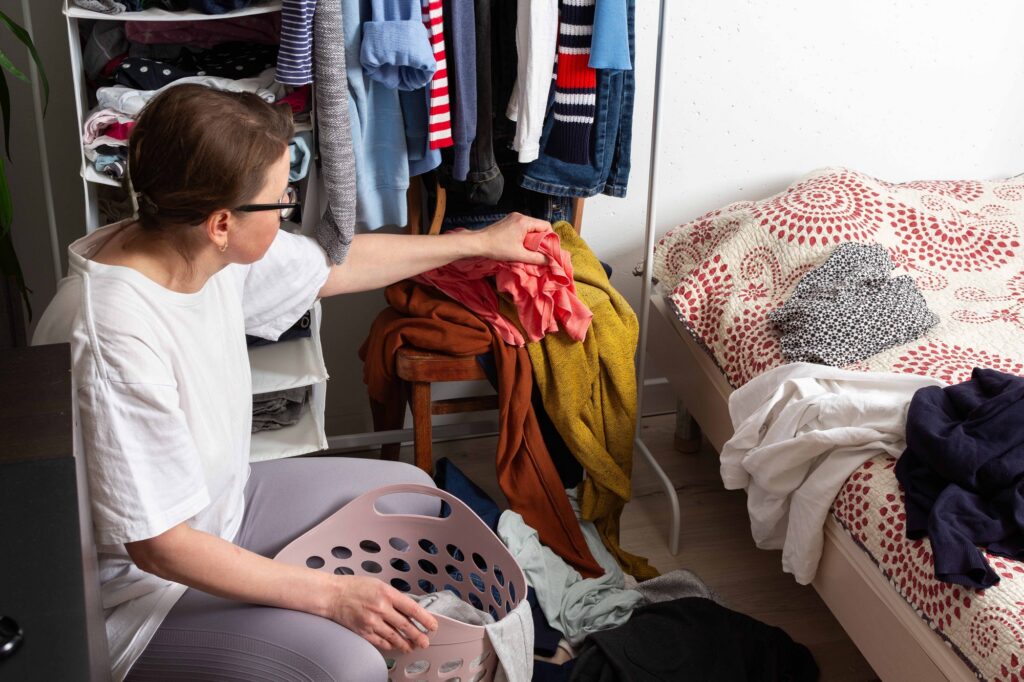
There were moments when she would suggest getting rid of something and my immediate reaction would be, “Absolutely not.” Sometimes I hadn’t used the item in years. Maybe it’s something I had forgotten it even existed. Sometimes I couldn’t even explain why I wanted to keep it. I just knew that I wasn’t ready to let it go.
Looking back, I realize I wasn’t protecting the item.
I was protecting my authority over the item.
Because if she got to decide what stayed and what left, then I wasn’t the sole decision-maker anymore.
And that felt uncomfortable.
Not because I didn’t trust her.
Because I was used to trusting myself.
There is a difference.
What makes this funny is that over time, Mrs. Heart would often purge something, wait a month or two, and then casually tell me about it later. And more often than not, my response was the same:
“Oh.”
That was it.
No panic, regret, or desperate search for the missing item.
Just an acknowledgment that I hadn’t noticed because I didn’t actually need it.
That realization was humbling.
Not because she was right and I was wrong.
But because it forced me to confront how much mental energy I was spending maintaining control over things that weren’t actually serving me.
And I think that’s the hidden cost of control.
We tend to focus on what control gives us.
It gives us certainty, predictability, and the feeling that things won’t fall through the cracks.
What we don’t talk about nearly enough is what control takes from us.
Control takes mental bandwidth.
Control takes energy.
It takes creativity.
It also takes partnership.
Control turns us into bottlenecks.
Everything has to run through us.
Every decision, approval, question, and every single detail.
And after a while, life becomes less about living and more about managing.
Trust Does Not Require Perfection
One of the most important lessons Mrs. Heart has taught me over the last three years is that trust does not require perfection.
I remember when she purchased some home décor that simply wasn’t my style. It wasn’t awful. It just wasn’t me. Years ago, I probably would have used that as evidence that I needed tighter control over every decision in the house. Instead, it taught me something much more valuable.
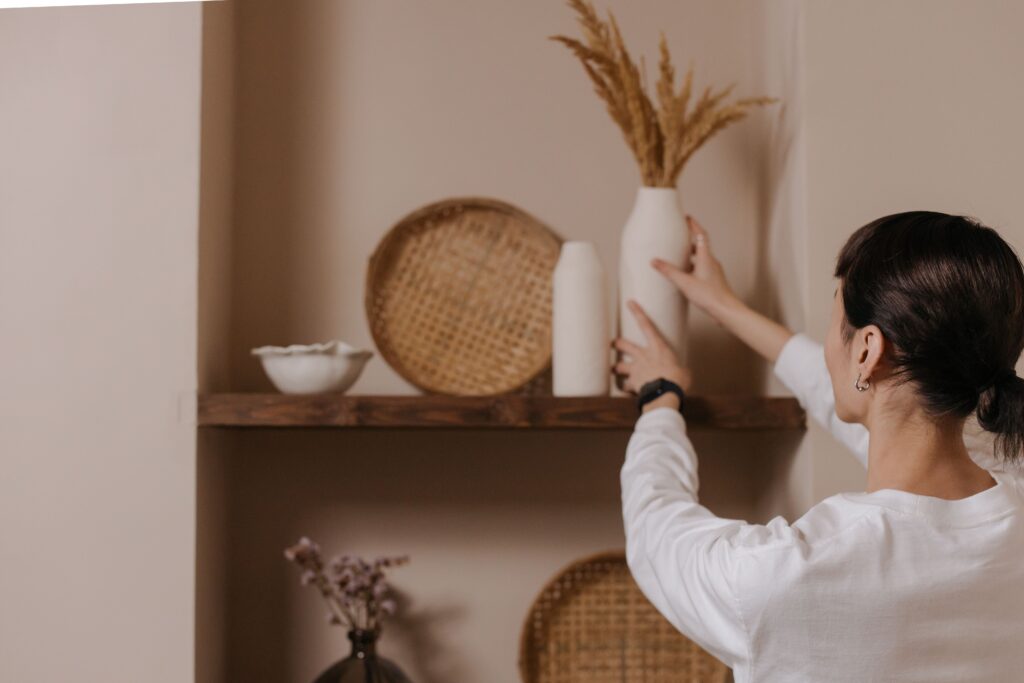
It taught me that people don’t have to be perfect to be trustworthy.
She didn’t need to be exceptional at every single thing.
There’s no need to think exactly like me.
She didn’t need to make every decision exactly the way I would have made it.
She simply needed enough freedom to contribute her gifts.
That distinction changed everything.
Today, Mrs. Heart has authority to make countless decisions without asking me first. She can experiment, organize, and purge as she sees fit.
I’ve allowed myself to let her improve systems so she can try new things. She can use her creativity in ways that genuinely make our home function better.
Some of those are things I never would have thought of myself. I wouldn’t even have attempted. Some of them work beautifully. A few don’t. And that’s okay.
Because the goal was never perfection.
The goal was peace.
That’s why one of my favorite sentences to describe our relationship is this:
I give her freedom and she gives me peace.
The more freedom I’ve given her to use her gifts, the less responsibility I’ve had to carry alone. When she had more room for her perspective, the less I have needed to rely exclusively on my own. The more I’ve loosened my grip, the more I have discovered that my home doesn’t need me standing over every detail in order to thrive.
For years, I thought control was protecting my standards.
What I know now is that control was also making me responsible for everything.
And that is an incredibly expensive price to pay.
These days, I still have standards. I still care deeply about my home. I still notice details. The difference is that I no longer believe that caring requires control. I believe that good people, when given room to contribute, often create something better than we could have created alone.
Control gave me certainty.
Trust gave me peace.
And after experiencing both, I would choose peace every single time.